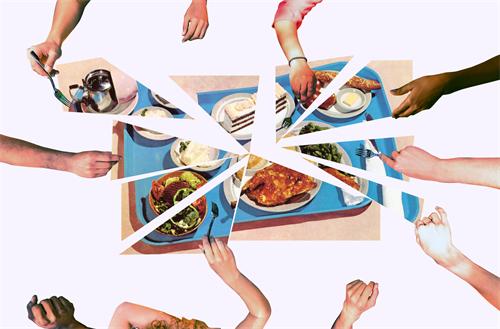
The contrast between Asia’s shared-dining traditions and Europe’s (especially Western Europe’s) individual-plate system is far more than a matter of eating habits. These two approaches function like distinct “social grammars,” quietly expressing fundamentally different ways of understanding relationships, individuality, social order, and the world itself.
Asian Shared Dining: A Value System Rooted in Collectivism
A communal understanding of food
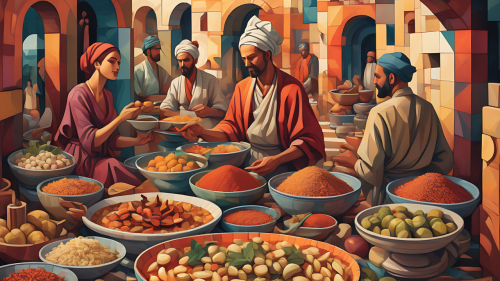
In much of Asia, dishes are placed at the center of the table and shared by everyone. This system reflects a worldview built on relationships and the collective. Food is seen as communal and fluid rather than as individually owned. The concept of “mine” is minimized, while “ours” is emphasized.
Individual preferences—such as favorite flavors or differences in appetite—can still be satisfied, but they occur within a structure that prioritizes the harmony and sufficiency of the whole. A person’s sense of satisfaction often comes from participation in shared abundance and the joy of eating together, not simply from personal indulgence.
Serving others as a social language
Offering food—placing a piece of fish on a guest’s plate, or picking out tender cuts for an elder—is not just politeness; it is a ritualized expression of social order and interpersonal ethics. The flow of food across the table follows a precise network of relationships: younger to older, host to guest, caretaker to child.
This system strengthens a social fabric based on reciprocity, human feelings, and relational bonds. In many Asian societies, the social world is built from countless small acts of mutual care and emotional investment. The dining table is one of the most important sites where these obligations are renewed and reinforced.
Diversity and fluidity: the table as an ecosystem
Shared meals typically offer a wide variety of dishes. Each person can choose freely, creating a flexible and inclusive structure that allows for differences within the group. The table operates like a small ecosystem requiring dynamic balance.
This fits naturally with the broader philosophical traditions of East Asia—Confucian emphasis on balance, Daoist flexibility, and a holistic way of thinking that prioritizes relationships among parts rather than rigid boundaries. What matters is not absolute equality but the overall feeling of harmony and abundance.
European Individual Plates: A Value System Rooted in Individualism
Clear boundaries and personal responsibility
In many parts of Western Europe, meals are portioned individually before being brought to the table. Each person receives a distinct plate of their own. This establishes clear physical and symbolic boundaries between “yours” and “mine.” People are responsible for their own order, their own preferences, and their own meal.
This system is a direct reflection of individualism, personal autonomy, and the ideal of self-responsibility. It aligns with the Western “social contract” tradition, where individuals are seen as independent units whose rights and boundaries need to be clearly defined and respected.
Formal equality, order, and rules
European dining is often structured according to a set sequence—starter, main course, dessert—using specific utensils designed for different foods. This minimizes ambiguity and reduces the need for negotiation or guesswork at the table.
The structure reflects a cultural preference for formal equality and procedural clarity. Just as European legal systems prioritize rules, predictability, and contracts, the dining table similarly relies on clarity and efficiency rather than relational cues.
Food as individual expression
Choosing what to eat is a highly personal act in the Western model. Individuals select dishes according to their tastes, allergies, values (e.g., vegetarianism), or lifestyle choices. The chef prepares the exact dish ordered, reinforcing the idea that each person’s uniqueness should be respected and expressed.
In this framework, difference is not something to be negotiated within a group—it is expected and normalized.
Emotional Bonds and the Sense of Belonging
Shared dining as a generator of emotional warmth
A round table where dishes circulate naturally creates a sense of togetherness. Festivals such as Chinese New Year’s reunion dinner or Korean kimchi-making gatherings turn food into a vessel for transmitting memory, identity, and affection across generations.
Neuroscientific studies suggest that shared dishes can increase oxytocin levels, enhancing feelings of closeness and trust. Shared meals inherently support nonverbal communication.
Individual plating shifts emotional communication
In the Western dining model, emotional connection relies more heavily on conversation, eye contact, and deliberate communication. Without the shared handling of dishes, a key nonverbal channel is reduced.
Research shows that the efficiency of nonverbal emotional transmission drops by roughly one-third in individual-plate settings, compared to meals where dishes are shared. The interaction becomes more intellectual and linguistic rather than physical and ritualistic.
Psychological Pressure and Comfort
Shared dining: warmth with social tension
While shared dining can feel intimate and communal, it also introduces potential discomfort. Some diners experience anxiety over shared utensils or feel pressured when elders insist on offering food. fMRI studies indicate that shared-dining contexts activate regions of the prefrontal cortex related to social evaluation and self-monitoring.
Individual plates: control and reduced stress
By contrast, having one’s own plate offers autonomy and control. There is no concern about competing for dishes, violating norms, or dealing with hygiene issues. Studies indicate that cortisol levels—an indicator of stress—are approximately 28% lower when individuals eat from personal plates than when they must share dishes and negotiate access.
Historical and Religious Origins
Communal eating in Asia: hierarchy and survival
In ancient China, shared feasting practices such as “ding food” reinforced lineage hierarchy and the authority of elders. In Korea, the tradition of sharing kimchi stems from agricultural life, where communal production and mutual support were necessary for survival in harsh winters.
Individual plating in Europe: safety and spiritual individuality
The European habit of dividing food has roots in medieval nobility, who used individual plates partly to avoid poisoning. Over time, this developed into a formal dining etiquette.
Christian iconography—such as the Last Supper—also emphasizes each individual worshiper’s direct relationship with God. Spiritually and socially, this reinforces a sense of personal identity and autonomy.
No Absolute Model: Both Systems Contain Exceptions
Of course, these general patterns are not absolute.
Asia also has individualized meal formats—such as Japanese set meals or Taiwanese personal hotpots.
Europe also has communal traditions—like Spanish tapas or family-style Sunday roasts.
What matters is not rigid difference but the underlying values that shape each culture’s default expectations.
Globalization and Hybrid Dining Systems
As cultures mix, dining practices evolve:
East integrating Western ideas
- Mainland China has promoted “public chopsticks” to separate personal and shared utensils.
- Taiwanese restaurants popularized “mini hotpots,” keeping communal ambiance while reducing hygiene concerns.
West integrating Eastern ideas
- Many American restaurants now offer “family-style sharing plates.”
- Spain’s tapas culture is increasingly adopted elsewhere as a flexible, social dining experience.
These hybrids show that dining practices can adapt while preserving cultural meaning.
Future Possibilities: Designing for Health, Comfort, and Culture
As dining environments evolve, new solutions may bridge the gap between emotional warmth and individual comfort, such as:
- Rotating tabletops that minimize reaching and contact
- Smart serving technologies that ensure hygiene and precise nutrition
- Modular tableware systems that allow smooth switching between sharing and individual dining
Such innovations treat dining not just as tradition but as an engineered response to human needs.
Conclusion: Shared or Separate—Each System Reflects a Human Strategy
Whether people share dishes or eat from individual plates, the dining table is fundamentally a mirror of cultural values.
Asian shared dining prioritizes relationship networks, fluidity, and collective harmony.
European individual plating prioritizes autonomy, equality of portions, and personal responsibility.
Neither is superior. Each is a coherent cultural solution shaped by history, ecology, philosophy, and social structure. In today’s globalized world, the most meaningful approach may lie in flexible adaptation—preserving the warmth of shared dining in intimate settings while embracing the comfort and hygiene of individual plates in public contexts.
Through such balance, dining can continue to harmonize cultural tradition with contemporary human needs.
References
- Anderson, E. N. Everyone Eats: Understanding Food and Culture. NYU Press.
- Wu, David Y. H. “The Chinese Feast: A Symbolic Interaction Perspective.” Ethnology, vol. 21, no. 4.
- Fischler, Claude. “Food, Self and Identity.” Social Science Information, 27(2).
Recommend:

Why Some Cultures Consider Certain Animals Food—While Others Reject Them Entirely
Why Yunnan’s Food Culture Is China’s Most Diverse—and How Ethnic Minorities Shaped It
How Colonial Trade Routes Still Shape Modern Taste Preferences
How Naples Preserved the Soul of Pizza Despite Global Reinvention