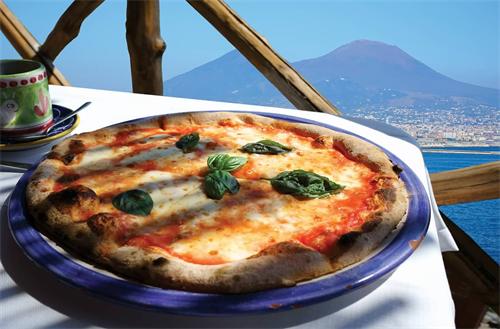
In a world where pizza has become a global playground—stacked, stuffed, reverse-engineered, hybridized, and endlessly reinvented—Naples remains an immovable cultural anchor. It does not reject innovation; instead, it protects the essence of pizza through a deeply rooted system of craft, community, regulation, and identity. What began as a humble street food for the poor has been elevated into an intangible cultural treasure, a symbol of place, and a living artisan tradition. Naples proves that safeguarding a culinary soul is not a matter of resisting change but of knowing what must never be compromised.
From Poor Man’s Meal to Cultural Totem
Naples is the largest city in southern Italy, a warm Mediterranean port framed by fertile volcanic soil and centuries of layered history. Italians have long said, “Vedi Napoli, e poi muori”—see Naples, and then die—suggesting its beauty leaves nothing else to desire. Yet for many, its most enduring gift is not the coastline or the architecture, but the food culture that arose from its working-class roots.
Modern pizza was born not in royal kitchens but in the crowded alleys of 18th- and 19th-century Naples, where poverty shaped the local diet. For the laboring poor, pizza offered everything they needed: cheap ingredients, quick preparation, and enough calories to endure long days. The dough—just flour, water, yeast, and salt—could be stretched thin to feed more mouths. Vendors baked it in simple charcoal-fired ovens and sold it by the slice to people who had neither time nor means for elaborate meals.
Tomatoes arrived in Italy as early as 1530, yet locals were convinced they were poisonous. Hunger pushed Neapolitan farmers to try cooking them anyway, and they discovered their sweetness and acidity transformed the flatbread entirely. By the early 19th century, tomatoes had become inseparable from Naples-style pizza. The first modern pizzeria opened in 1830 and still operates today, a living timeline of tradition. In 1889, when Queen Margherita tasted a pizza topped with tomatoes, mozzarella, and basil—symbolizing the red, white, and green of the Italian flag—the food of the poor rose to the status of national icon.
A Scientific Art: The Precision of Authenticity
Authentic Neapolitan pizza is a discipline shaped over centuries. It demands a balance of strict rules and artisanal intuition. Dough must be kneaded and stretched by hand; rolling pins or mechanical presses are prohibited. It requires three rounds of folding, followed by a long rest of 16 to 18 hours in wooden boxes, where fermentation develops its signature texture and aroma.
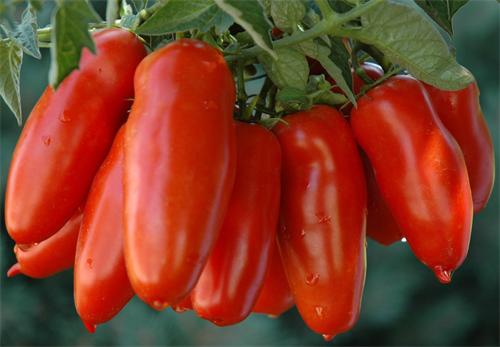
San Marzano tomatoes
Every ingredient is bound to place: “00” flour milled to an ultra-fine consistency; San Marzano tomatoes grown in volcanic soil near Mount Vesuvius; mozzarella from water buffalo raised in Campania; extra virgin olive oil pressed from local orchards. These ingredients do more than guarantee flavor—they are geographical signatures, carriers of cultural identity.
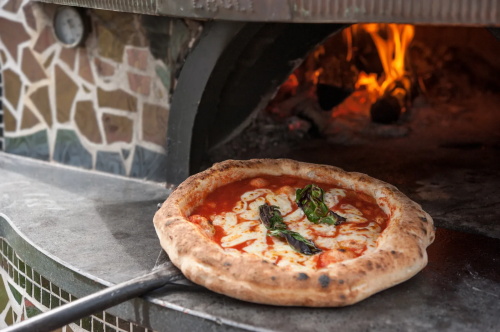
The baking method is equally sacred. The oven must be a dome of brick and clay, fired with wood and heated to 485°C. The pizza cooks in 60 to 90 seconds, emerging with a blistered, leopard-spotted crust—crisp on the outside and tender within. The margin of error is tiny; the craft requires years of repetition. In Naples, such precision is not considered obsessive. It is seen as a duty to history.
Codifying Tradition in the Modern World
To protect this heritage, the Italian government and the Neapolitan community built a robust framework of regulations and certification. The Association of True Neapolitan Pizza (Associazione Verace Pizza Napoletana, AVPN) sets detailed guidelines: the pizza must be 35 centimeters in diameter, the rim no more than two centimeters thick, toppings applied in specific ways, and the cooking method strictly traditional.
In 2022, the European Union granted Neapolitan pizza the STG (Traditional Specialty Guaranteed) status, recognizing its unique, historically consistent preparation. This followed UNESCO’s 2017 designation of Neapolitan pizza-making as a form of Intangible Cultural Heritage, a validation not only of the recipe but of the craftsmanship and social rituals behind it.
Some chefs from other regions criticize these protections as giving Naples an unfair advantage. But for Neapolitans, these rules are not barriers—they are the backbone of authenticity. In a city of 900,000 people, with nearly 8,000 pizzerias and 15,000 pizzaioli, pizza is not just an industry but a social institution. There is, on average, one pizzeria for every 113 residents, a density that rivals convenience stores in major Asian cities.
Pizza Police and Blockchain: Tradition Meets Technology
Naples’ commitment to authenticity has even birthed unusual innovations. The idea of a “pizza police” may sound whimsical, but AVPN has launched a blockchain-based certification system that gives each pizza a digital identity. By scanning a code, diners can trace the flour batch, fermentation conditions, and even the pizzaiolo’s notes for the day. Thirty pizzerias are testing the system, which has sparked lively debates on social media. Purists call it overkill; technophiles praise it as the future of food transparency.
Amusing or not, the initiative reveals a deeper truth: Naples is willing to use modern tools not to reinvent pizza but to protect it. Tradition and innovation do not compete here; they coexist like ingredients on a well-balanced Margherita.
Climate Change: A New Threat to an Ancient Tradition
In recent years, climate change has begun rewriting the flavor code of Neapolitan pizza. Campania’s average temperature has risen 1.8°C in a decade, altering the sugar-acid ratio of San Marzano tomatoes. Drought has reduced buffalo milk production by 27%, forcing some farms to migrate 60 kilometers north in search of water. Basil growers have installed smart greenhouses to shield their crops from extreme temperatures.
This ecological stress has triggered technological responses. AI taste sensors analyze the chemical signatures of tomatoes and mozzarella to ensure they match traditional profiles. Plant scientists are experimenting with heat-resistant tomato varieties. Blockchain tracing systems guarantee that ingredients meet DOP and DOC standards despite supply fluctuations.
Thus, even as global forces reshape agriculture, Naples adapts—quietly, intelligently, and always with a commitment to preserving the sensory identity of its pizza.
The Soul of Naples: Community, Generosity, and Human Warmth
For Neapolitans, the heart of pizza is not just its ingredients or its regulations. It is the sense of community that has surrounded it for centuries. In the historic center, one can still encounter the tradition of “pizza sospesa”—the “suspended pizza.” A customer buys two pizzas but leaves one prepaid, noted with a sticky tag on the window. A hungry stranger or a homeless passerby can claim it without question. This simple gesture reflects a moral philosophy: pizza is a food made to be shared, not hoarded.
Such warmth shapes the city’s relationship with modernity. Naples accepts that global pizza culture will continue to evolve—topped with truffles, pineapple, wagyu, or kimchi. But it insists that creativity must still bow to authenticity. Naples offers the world an unchanging yardstick, a compass by which all interpretations of pizza can orient themselves. Innovation may add layers of flavor, but Naples preserves the core.
Conclusion: A Tradition that Refuses to Fade
Naples has succeeded in maintaining the soul of pizza not by isolating itself but by building a resilient cultural ecosystem. Through legal protections, strict craftsmanship, community rituals, and even forward-looking technologies, the city guards a culinary identity that has survived poverty, globalization, and climate pressure.
Ultimately, Neapolitan pizza remains what it has always been: a symbol of place, a bearer of memory, and a reminder that food can be both universal and deeply local. In a rapidly changing world, Naples shows how a dish can evolve without losing its essence. Its pizza is not just a recipe—it is a living tradition that continues to feed, comfort, and inspire the world.
References
- UNESCO. Art of Neapolitan ‘Pizzaiuolo’. Intangible Cultural Heritage Listing, 2017.
- Associazione Verace Pizza Napoletana (AVPN). International Regulations for True Neapolitan Pizza.
- European Commission. Traditional Specialty Guaranteed (TSG) – Pizza Napoletana, 2022.
- Capatti, Alberto & Montanari, Massimo. Italian Cuisine: A Cultural History. Columbia University Press.
- Italian Ministry of Agriculture (MASAF). Reports on San Marzano DOP and Mozzarella di Bufala Campana DOP supply chains.
Recommend:
Why Teppanyaki, Hibachi, and Korean BBQ Reflect Very Different Food Philosophies

Why Some Cultures Consider Certain Animals Food—While Others Reject Them Entirely

Why Our Brains Crave Certain Flavors: A Cultural & Biological Perspective
How Manila’s Food Culture Reveals Layers of Spanish, American, and Chinese Influence