Situated along the eastern edge of Manila Bay on Luzon Island, the Philippine capital has long been far more than an administrative center. Manila’s natural deep-water harbor made it a historical gateway for colonial expansion, maritime trade, and cultural exchange. As a result, the city became one of Southeast Asia’s most complex cultural crossroads. Its food, perhaps more than any other medium, offers a vivid and accessible narrative of this layered history. Each bite carries traces of Spanish colonial rule, American modernization, and centuries of Chinese migration and commerce — all woven into a distinctly Filipino flavor system shaped by local ingredients, climate, and taste preferences.
The complexity of Manila’s cuisine does not come from a single foreign influence overwhelming another. Instead, these influences were absorbed sequentially, transformed by the local palate, and gradually fused into today’s unique Filipino taste identity — a culinary style where acidity, sweetness, and savoriness intersect, and where hybrids, adaptations, and reinterpretations form the norm rather than the exception. To understand Manila’s food is thus to understand how the city itself was built, reshaped, and reimagined over centuries of cultural encounters.
I. The Deep Spanish Imprint (16th–19th Centuries): Establishing the Culinary Foundation
Spain’s presence in Manila began in 1571, and its three centuries of colonial rule laid the essential structural backbone of Filipino cuisine. Spanish influence did not simply introduce new dishes; it transformed local cooking methods, taste frameworks, and even social rituals around eating.
1. Introducing New Techniques and Ingredients
Stewing, frying, marinating, and the use of aromatics such as tomatoes, garlic, and onions became standard elements of Filipino cooking during this period. Ingredients that were foreign to the archipelago — tomatoes, potatoes, corn, chili peppers, chocolate, sausages, and hams — all arrived through Spanish trade networks and reshaped the local food system.
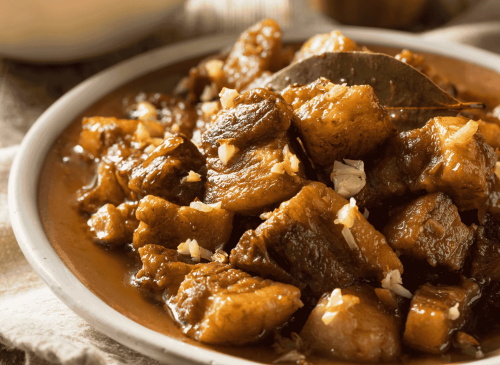
adobo
One iconic example of Spanish influence reinterpreted through local logic is adobo, often called the national dish of the Philippines. While its core technique — marinating meat in vinegar and spices before simmering — resembles Spanish escabeche traditions, Filipinos transformed it entirely. Coconut vinegar replaced wine vinegar, soy sauce (brought through Chinese channels) deepened the color and umami, and long simmering blended sour, salty, and subtly sweet notes. What emerged was not a Spanish dish anymore, nor a Chinese one, but a deeply Filipino culinary signature.
2. The Festive, Meat-Centered Dining Tradition
Spain also introduced the cultural idea of large, meat-centered feasts. Lechon, or whole roasted pig, became the centerpiece of religious and family celebrations. Although the practice is Iberian in origin, Filipino cooks added local aromatic plants such as lemongrass and seasoned the pig with native vinegars, resulting in a flavor profile markedly different from European versions. Its crackling golden skin and sumptuous aroma turned lechon into a symbol of abundance, celebration, and communal joy.
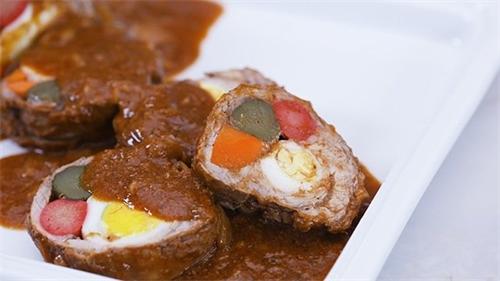
morcon
Complex Spanish-inspired dishes — such as morcon (stuffed meat roll) and lengua (ox tongue stew) — also became staples during fiestas and family gatherings. Their preparation requires time, labor, and patience, reinforcing the notion of food as a social event and collective effort.
3. The “Merienda” Tradition: A Spanish Habit Transformed
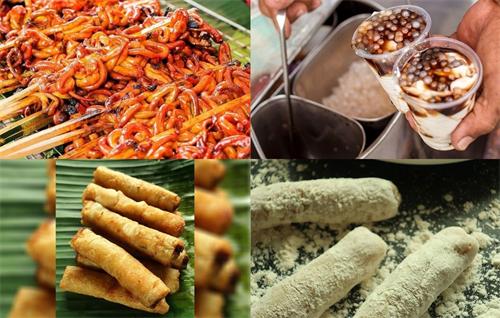
Another lasting Spanish legacy is the tradition of merienda, an afternoon snack time situated between lunch and dinner. Over generations, this custom evolved into a uniquely Filipino practice. In Manila, merienda may include:
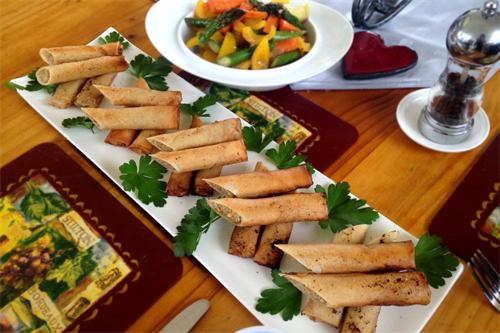
Filipino-style spring rolls (lumpia)
- savory snacks such as pork-intestine delicacies
- fried or fresh Filipino-style spring rolls (lumpia) filled with vegetables, chicken, and even shredded jackfruit
- sweet or tangy dipping sauces
These snacks reflect the layered nature of Manila’s food culture: Spanish eating schedules, Chinese ingredients, and Filipino tropical produce blended into new culinary forms.
II. The American Modernizing Wave (20th Century): Fast Food and Urban Convenience
When Spain lost control of the Philippines in 1898, the United States entered the scene. Although American rule lasted only about fifty years, its impact on Manila’s eating habits was immediate, modern, and enduring.
1. Industrialized Food and the Birth of Filipino Fast-Food Culture
The Americans introduced hamburgers, hot dogs, fried chicken, sandwiches, and carbonated drinks, along with industrialized convenience foods such as canned meats, processed cheese, and breakfast sausages. As Manila grew into a modern city, the ideas of speed, affordability, and convenience became increasingly important. This environment allowed fast food to flourish — so much so that the Philippines eventually developed its own fast-food giant, Jollibee, which would become a cultural icon in its own right.
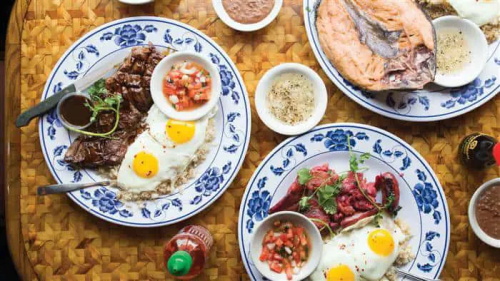
silog breakfast series
One of the most telling examples of American influence blended with Filipino sensibilities is the popular silog breakfast series. While American breakfasts centered on “eggs and meat,” Filipinos transformed the concept:
- replacing toast with garlic fried rice,
- pairing it with fried eggs,
- and adding Spam, longganisa (local sweet sausages), or marinated meats.
This combination — salty, garlicky, aromatic, and comforting — is unmistakably Filipino, even though its structural roots are American.
2. Reinforcing the Filipino Love for Sweetness
American-style desserts also strengthened the Filipino preference for pronounced sweetness. Cakes, ice creams, and candies became richer and sweeter. A quintessential manifestation of this tendency is halo-halo, Manila’s beloved cold dessert made with crushed ice, sweetened beans, gelatin, local fruits, condensed milk, and ice cream. Vibrant, colorful, and intensely sweet, halo-halo offers an ideal antidote to the tropical heat.
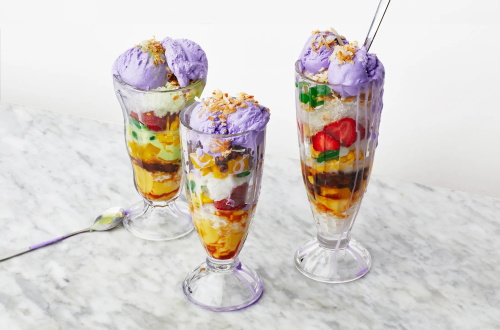
halo-halo
Beyond taste, American influence helped shape Manila’s modern food culture by aligning it with fast-paced urban life. Speed, convenience, and affordability became standard expectations for daily meals.
III. The Deep and Continuous Chinese Influence: The Soul of Everyday Eating
Unlike Spain and the United States, China’s influence on Manila emerged not from colonization but from centuries of migration and trade. Chinese merchants and settlers formed communities in Manila long before Spanish rule, and their culinary contributions permeated daily life at every level — from street food stalls to family kitchens.
1. Transforming Staple Foods: Noodles, Rice, and the Sauce System
Chinese immigrants introduced noodles, dumplings, steamed buns, siomai (shao mai), and various dim sum items. Over time, these foods were adopted and localized. Thus emerged:
- pancit, a family of Filipino noodle dishes
- siopao, Filipino-style steamed buns
- mami, noodle soups inspired by Chinese culinary traditions
Pancit, for instance, mirrors the structure of Chinese stir-fried noodles but incorporates Filipino soy sauce, local vegetables, seafood, and citrus. The result is a dish that feels both familiar and distinctly Filipino.
2. Techniques and Seasonings That Became Household Essentials
The Chinese influence is also evident in cooking techniques and everyday ingredients. Stir-frying over high heat, the use of soy sauce and tofu, and the incorporation of garlic and onions as foundational aromatics came largely from Chinese practices. These techniques spread beyond Chinese communities and became central to Philippine home cooking.
3. The Localized Rice Culture: The Case of Suman
Chinese-style rice dumplings left their mark on Filipino rice customs, but local adaptation led to the creation of suman — a glutinous rice delicacy:
- wrapped in fresh coconut leaves,
- slow-cooked to absorb the leaf’s aroma,
- subtly sweet, soft, and fragrant.
Suman resembles Chinese zongzi in form but differs entirely in texture, flavor, and cultural meaning. It is a product of tropical reinterpretation, not imitation.
IV. How These Three Layers Fuse into a Unified “Filipino Flavor Logic”
Despite receiving influences from vastly different culinary traditions, Filipino food maintains a strong, coherent identity. This consistency comes from a uniquely Filipino way of integrating foreign elements.
1. The Dominant Role of Acidity
Filipinos have a long-standing preference for sour flavors. Whether the dish originates from Spain or the United States, it can easily be enhanced with:
- calamansi juice,
- tamarind-based broths,
- or green mango–infused sauces.
This acidic backbone gives Filipino dishes their distinct brightness and liveliness.
2. The Signature Sweet–Savory Balance
A noticeable sweet–salty interplay defines many Manila dishes:
the sauce of adobo, the seasoning of pancit, the marinade of local sausages, and even certain stews and snacks. This taste profile binds disparate culinary influences into a unified experience.
3. The Reassignment of Social Meaning
Foreign dishes in Manila rarely remain “foreign.” Instead, they acquire new meanings:
- Lechon becomes the soul of celebrations.
- Pancit symbolizes longevity, echoing Chinese customs.
- Silog breakfasts represent working-class energy and comfort.
- Halo-halo becomes a shared cultural memory of tropical summers.
Each dish evolves into part of the collective identity of the city.
V. Climate, Seasonality, and Why They Matter When Experiencing Manila’s Food
Manila lies within a tropical monsoon climate. Temperatures average around 30°C year-round, and weather patterns strongly influence local eating habits. The best time to visit is February to May:
- February–April: generally dry and comfortable for exploring markets and street stalls
- Early April onward: rainfall increases
- June–November: typhoon season, requiring weather awareness
The intense heat encourages a culinary culture rich in refreshing acidity, cold desserts, grilled foods, and fruit-forward snacks. Halo-halo, calamansi drinks, and vinegar-based dishes are not only cultural products but also climatic responses.
Conclusion: Manila as a City Best Understood Through Taste
Manila’s food culture is not the result of a homogeneous tradition but the outcome of long-term encounters among different civilizations. Spain contributed structure, techniques, and celebratory customs. The United States introduced modernity, speed, and industrialized foodways. China shaped everyday eating habits through noodles, rice traditions, and flavor techniques. Yet it is the Filipino palate — guided by a love of acidity, a sweet–savory balance, and a deep sense of social meaning — that unified these influences into a cohesive culinary identity.
Today’s Manila is a place where lechon roasting at fiestas meets the sizzling aroma of pancit from neighborhood stalls; where halo-halo offers colorful comfort on humid afternoons; where silog breakfasts fuel commuters and families alike. Through its layered flavors, Manila tells a story of adaptation, resilience, and cultural creativity — a history not written in books alone but preserved in every meal.
Sources
- Camacho, M. M. (2016). “Global Flows and Local Foods: Culinary Connections Between Manila and the Spanish Empire.” Food & Foodways, 24(3).
- Fernandez, D. G. (Ed.). (2008). Palayok: Philippine Food Through Time, On Site, In the Pot. Bookmark Press.
- Garcia, B. (2020). “Chinese Influence on Filipino Cuisine: Migration, Adaptation, and Hybridity.” Journal of Asian Culinary Studies, 5(1).
Recommend:
The Science of Flavor Pairing and Why Some Cultures Break the Rules
How Taste for Bitterness Varies Across Countries—and the Traditions Behind It
Why Some Cultures Emphasize Large Portions and Others Value Moderation
Cultural Appropriation in Cuisine: When Does Inspiration Become Insensitive?