
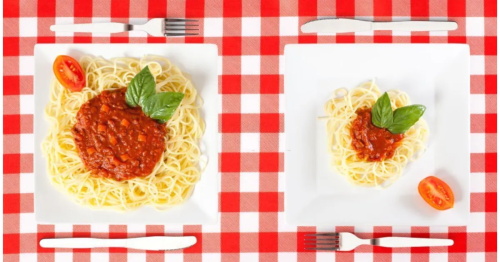
Food culture is an enormously rich concept—one that stretches across natural science, social science, and even philosophy. It includes the raw materials available for consumption, the technologies used to transform them, the artistry embedded in cooking, and the customs, traditions, and worldviews that guide eating. In other words, it is the sum of how people obtain, prepare, consume, and ritualize food. Within this broad terrain, one question reveals striking cultural contrasts: Why do some societies celebrate large portions, while others prize modest, precisely measured servings?
The answer lies at the intersection of history, environment, social organization, aesthetics, and identity. Portion size is not merely a pragmatic question of “how much food should a person eat?” Instead, it is deeply symbolic—signaling abundance or restraint, hospitality or self-discipline, practicality or aesthetic refinement. To understand these divergent values, we must begin with the environments and historical pressures that shaped each food philosophy.
1. Scarcity, Survival, and the Historical Roots of Large Portions
Many cultures that today favor large portions once experienced prolonged periods of scarcity, harsh climates, unstable harvests, or pastoral lifestyles. These include the American frontier, China’s northeastern farming regions, various nomadic cultures, and traditional German rural communities. In these contexts, large portions were a direct cultural response to uncertainty.
Where food security was fragile, abundance signaled safety. A generous table—overflowing dishes, shared platters, refills without request—embodied a triumph over deprivation. The custom of preparing far more than necessary during gatherings became a social norm. Hosts demonstrated hospitality not through subtlety or elegance, but through sheer quantity. Leftovers were not a mistake; they were proof of foresight, generosity, and the ability to provide without hesitation.
This explains why, in many collectivist or kinship-centered societies—such as China, southern Italy, and much of the Arab world—meals are structured around communal abundance. Food is placed in large bowls or platters in the center of the table, encouraging interaction: passing dishes, offering portions, urging others to eat more. In these cultures, “being full” does not simply mean physical satiety; it communicates emotional warmth, social closeness, and relational stability. To refuse another serving can even be interpreted as declining the host’s affection.
Large portions here also serve a social function: ensuring that the communal bond is visible and palpable.
2. Efficiency, Labor, and the Practical Logic of Eating Big
A different justification for large portions emerges in societies where food is integrated into a rhythm of labor and productivity. Traditional American dining exemplifies this pattern. In regions where physical work was intense or time was treated as a scarce resource, portion size became linked to efficiency.
A giant steak, an oversized soda, or a plate piled high with fries was not merely indulgent—it represented a practical solution: consume abundant calories at once to reduce interruptions to work. This mindset reflects a utilitarian view of the body as a machine requiring fuel. Eating is optimally performed in fewer, more calorically dense sessions, leaving more hours for productivity.
Large portions thus came to symbolize freedom, abundance, and a refusal to accept limitations—values deeply embedded in American frontier mythology and its modern consumer culture.
3. Moderation Born from Constraint: When Small Portions Make Sense
Not every society evolved under conditions of abundance or expansive farmland. Some—such as Japan, many Greek islands, and other Mediterranean regions—developed within ecosystems marked by limited arable land or a reliance on diverse but small-quantity ingredients such as seafood, herbs, and seasonal vegetables.
In these contexts, moderation reflects both necessity and philosophy. Small portions are crafted to highlight the unique character of each ingredient, emphasizing quality rather than volume. Culinary traditions like Japanese kaiseki or French haute cuisine celebrate intricacy: the precise cut of a vegetable, the elegance of plating, the subtle transitions between courses.
Moderation prevents sensory fatigue. It encourages diners to savor rather than consume. A meal becomes a curated journey rather than an energy-loading exercise. The ideal outcome is not fullness but a refined sense of “just right”—a balance of flavors, nutrients, and pacing.
This food philosophy aligns naturally with modern environmental ethics: respect for resources, minimal waste, and appreciation for the totality of ingredients.
4. Individualism, Wellness, and Modern Small-Portion Culture
In societies that emphasize individual autonomy, personal boundaries, and health—such as contemporary Scandinavia or California—the preference for moderate portions is tied to self-discipline and body autonomy.
To choose the right amount of food for oneself is to demonstrate a rational command over one’s lifestyle. Portion control is an act of self-respect, not merely dietary management. Finishing exactly what is on one’s plate becomes a sign of precision and awareness.
In these cultures, offering excessive quantities of food may even be viewed as intrusive—an implicit pressure on someone’s personal agency.
Here, the body is imagined not as a vessel to be “filled up,” but as a temple to be maintained, or even a “project” to be optimized.
5. Tanzania: A Case Study of Coexisting Philosophies
Tanzania provides a vivid example of how both moderation and abundance can coexist harmoniously within one culinary ecosystem.
Ugali and the Logic of Everyday Moderation
Ugali—cornmeal cooked into a firm dough—is the quintessential Tanzanian staple. Mild in flavor and simple in preparation, its purpose is practical: to deliver affordable, efficient calories. When paired with small amounts of beans, vegetables, or stews, ugali functions as an economical base that allows scarce or expensive proteins to stretch further.
This reflects a careful, resource-efficient food logic: fill the stomach with staple starch, use precious ingredients sparingly for flavor, and ensure everyone eats adequately at minimal cost.
Nyama Choma and the Philosophy of Festive Abundance
Yet the same society celebrates extravagance when it comes to meat during communal occasions. Nyama Choma—roasted meat beloved across Tanzania and especially within Maasai pastoral culture—is more than a dish. It is a symbol of hospitality, masculinity, generosity, and social cohesion.
During celebrations or when hosting respected guests, the meat must be abundant, the cuts large, the cooking process communal and visible. Leftovers signify not wastefulness but the depth of the host’s goodwill.
Thus Tanzania offers a powerful lesson: everyday life may call for moderation, but ritual life often demands abundance. The two values do not contradict—they complement each other and create a complete cultural picture.
6. Aesthetic Cultures of Eating: When Small Is Beautiful
In food traditions where dining is highly ritualized and artistry matters, smaller portions communicate sophistication. Kaiseki, nouvelle cuisine, and northern Italian fine dining prioritize the experience over the quantity. Moderation protects the senses, allowing each flavor to stand out.
“Less is more” becomes not an economic rationale but an aesthetic ideal. The slight hunger left at the end of such meals is intentional, preserving alertness and inviting reflection.
7. Buffets: The Arena Where Abundance and Moderation Collide
Few modern dining formats capture the tension between “large portion culture” and “moderation culture” as vividly as the buffet. Its historical evolution mirrors changing attitudes toward abundance and restraint.
From Aristocratic Display to Industrial Abundance
Early buffets—such as the Scandinavian smörgåsbord or colonial cold tables—were displays of wealth and variety, not opportunities for overeating. Their purpose was to showcase abundance gracefully.
The modern buffet, however, emerged in post-WWII America, shaped by industrial food production and consumerism. The fixed price and unlimited choice triggered a psychological “maximize value” response. Diners became motivated to “eat their money’s worth,” equating quantity with success. Restaurants encouraged this mentality through dramatic food displays—mountains of shrimp, towers of desserts, fountains of chocolate.
In this model, the buffet became a temple of abundance, where overeating was normalized and even celebrated.
The Rise of the “Moderate Buffet”
Yet in recent decades, new styles of buffets—high-end hotel spreads, Japanese fusion buffets, health-oriented selections—have repositioned the format. Here, value comes from:
- high-quality ingredients,
- small bites designed for tasting rather than stuffing,
- curated, visually elegant presentations.
These buffets invite diners to demonstrate taste, restraint, and nutritional awareness. The performance shifts from maximizing caloric intake to showcasing one’s ability to choose wisely.
Thus the buffet becomes a stage not only for abundance but also for self-control—depending on how diners choose to perform their identity.

8. Two Philosophies, One Human Story
Large-portion cultures tend to view the body as something to be fueled and satisfied—a vessel for energy and comfort. Moderation-oriented cultures, by contrast, treat the body as something to protect, refine, and regulate. One philosophy presses for efficiency (“get all your calories at once”), while the other encourages slowness and reflection (“enjoy mealtime as a vital rhythm of life”).
Both represent valid and meaningful ways of relating to food.
Ultimately, portion size is never just about food.
It is about history and ecology, solidarity and identity, pragmatism and beauty, labor and leisure, fear of scarcity and confidence in abundance.
Large portions and moderate portions are not opposites—they are cultural expressions shaped by the worlds people inhabit, the struggles they inherit, and the values they hold dear.
References
- Counihan, Carole, and Penny Van Esterik, eds. Food and Culture: A Reader. Routledge, 2013.
- Dietler, Michael. “Feasts and Commensal Politics in the Political Economy.” Feasts: Archaeological and Ethnographic Perspectives on Food, Politics, and Power, Smithsonian Institution Press, 2001.
- Nestle, Marion. Food Politics: How the Food Industry Influences Nutrition and Health. University of California Press, 2013.
- Anderson, E. N. Everyone Eats: Understanding Food and Culture. NYU Press, 2014.
Recommend:
The Coastal Food Culture of Zanzibar: A Blend of African, Arab, and Indian Flavors
Why New Orleans Cuisine Is a Cultural Wonderland of African, French, and Caribbean Influences

What Food Critics Get Wrong About Cultural Cuisine
How Naples Preserved the Soul of Pizza Despite Global Reinvention