
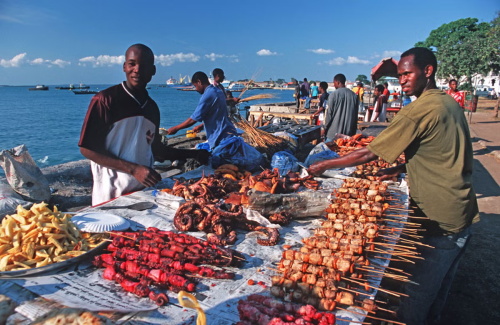
Floating gently in the warm waters of the Indian Ocean, the Zanzibar Archipelago stands as one of East Africa’s most culturally layered and historically charged regions. Composed of Unguja, Pemba, and over twenty surrounding islets, the archipelago covers around 2,657 square kilometers and once existed as an independent state before joining Tanganyika to form the United Republic of Tanzania in 1964. Today, about 1.6 million people inhabit this tropical cluster of islands, surrounded by lush vegetation—nearly half of the land remains forested, dotted with more than five million coconut palms and over two thousand plant species. Among them, Zanzibar’s 4.5 million clove trees are globally renowned, supplying roughly 70% of the world’s cloves and earning the archipelago its poetic name: the “Spice Islands.”
Yet the true essence of Zanzibar lies not only in its landscapes, but in its layered cultural history—an intricate blend shaped by migration, maritime trade, religion, and centuries of human interaction. Its food culture, in particular, is a living archive of the Indian Ocean world. On a single plate, one may taste the persistence of African traditions, the aromatic imprint of Arab influence, and the refined spice systems of India. Zanzibar’s cuisine is more than a collection of dishes; it is the story of an oceanic crossroads.
I. A Maritime World: How History Shaped the Culinary Identity of Zanzibar
Since as early as the eighth century, Arab sailors discovered and mastered the monsoon wind cycles of the Indian Ocean, opening reliable maritime routes between the Arabian Peninsula, East Africa, and the Indian subcontinent. This maritime network soon evolved into one of the most important trade corridors of the Old World, linking Persia, Arabia, India, and, further east, China. It later became a significant segment of China’s maritime Silk Road and the route of Zheng He’s famed voyages.
Zanzibar, positioned like a jewel on this ocean highway, quickly grew into a hub for spices, ivory, tortoiseshell, and luxury goods. In the early nineteenth century, the Sultanate of Oman defeated the Portuguese and relocated its capital to Zanzibar in 1840, establishing a thriving yet unequal commercial empire. Goods from East Africa—ivory, cloves, cardamom, shells—flowed continuously toward Arabia and India, while Chinese silk, ceramics, and tea traveled across the same waters in the opposite direction.
But the period of prosperity was shadowed by darker chapters. For much of the nineteenth century, Zanzibar served as East Africa’s most notorious center for the slave trade. Arab slave traders captured and transported enslaved Africans to be sold on the island, where large slave markets once operated. Although Britain officially declared Zanzibar a protectorate in 1890 and gradually enforced abolition, the remnants of these sites still stand in Stone Town today as a solemn record of this past.
In contemporary times, Zanzibar has transformed from a commercial empire and tragic waypoint to one of East Africa’s most beloved tourist destinations. Over one million tourists visit the archipelago annually, generating more than USD 1 billion and contributing over 20% of its GDP. Crystal-clear waters, shallow sandbanks ideal for wading, and a relaxed tropical lifestyle draw global travelers—yet it is the island’s remarkable blend of cultural and culinary traditions that leaves the deepest impression.
II. Foundations of Flavor: African and Bantu Culinary Traditions
Long before traders and sailors from distant continents arrived, the East African coast was home to communities who relied on hunting, gathering, fishing, and early agriculture. Their foodways laid the essential foundation for what would later become Swahili cuisine.
1. Staple Foods of the Bantu World
Bantu-speaking communities introduced and cultivated key crops that remain central to Zanzibar’s diet today: cassava, maize, plantains, bananas, and coconuts. These ingredients continue to shape daily meals.
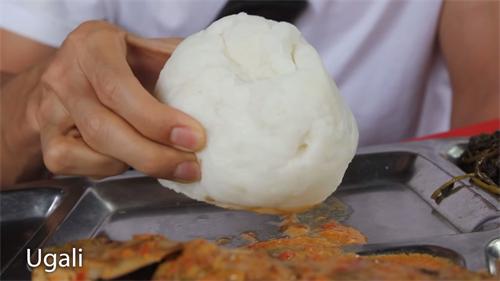
The most iconic staple is Ugali, a thick dough-like preparation made from maize flour. Across East Africa, Ugali is eaten with stews of meat, fish, vegetables, or beans, forming a comforting and hearty base of everyday cuisine.
2. Traditional Cooking Methods
The African culinary signature—charcoal grilling over open fire—remains widely practiced throughout Zanzibar. Whether grilling freshly caught fish or skewers of marinated meat, charcoal cooking emphasizes natural flavors, smokiness, and simplicity, grounding Zanzibar’s food firmly in African traditions.
III. Arab Influence: From Religion to Spices and Urban Food Culture
Among all external influences, the Arab contribution to Zanzibar’s food culture has been the most profound and long-lasting.
1. Islam and Dietary Customs
Arab traders and settlers introduced Islam, which today remains the dominant religion on the islands. Islamic dietary laws shape daily food practices, from avoiding pork and alcohol to emphasizing communal feasting.
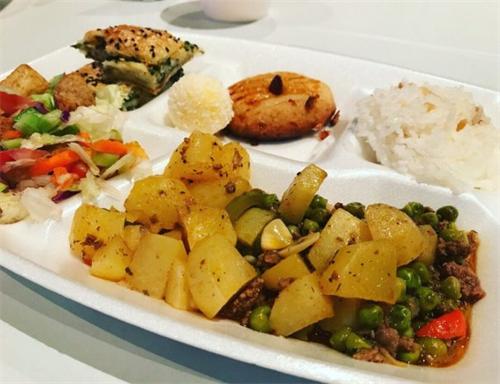
Iftar
During Ramadan, the evening meal of Iftar becomes a vibrant culinary event where Arab dates, spiced rice dishes, meat stews, and sweet treats coexist with African and Indian contributions. Food becomes part of religious ritual and spiritual identity.
2. The Introduction of Rice, Dates, and Spice Techniques
Arabs introduced rice cultivation and consumption, which quickly became central to the Swahili diet. More significantly, they expanded spice cultivation, establishing clove plantations that eventually made Zanzibar the world’s dominant clove supplier.
Arab cooking also brought stewing and slow-cooking methods—techniques that later merged seamlessly with African ingredients and Indian spice logic.
3. Formation of Urban Food Culture
Stone Town, with its narrow alleyways, carved wooden doors, and Arab-influenced architecture, became a melting pot where food markets, spice shops, and street stalls reflected the island’s global interactions. Aromatic coffee brewed with cardamom, fresh bread, grilled meats, and sweet pastries echo the island’s Arab heritage.
IV. Indian Influence: Spice Logic and Culinary Precision
Indian merchants—especially those from Gujarat—played a central role in the Indian Ocean spice trade. Their arrival introduced new ingredients, cooking methods, and food philosophies that have since become inseparable from Zanzibar’s culinary identity.
1. The Spice Architecture
Indian spices transformed Zanzibar’s flavor palette. Turmeric, cumin, coriander seeds, chili peppers, mustard seeds, cloves, and cardamom created a sophisticated spice system. The Indian tradition of blending spices into complex mixtures greatly influenced the way Swahili dishes evolved.
2. Vegetarian Dishes and Snack Culture
Indian vegetarian culture introduced new ways of cooking legumes and vegetables, enriching the diversity of daily meals. Fried snacks such as samosas became street-food staples, reflecting the Indian love for spiced fillings and crisp textures.
V. Culinary Fusion on the Plate: Signature Dishes of Zanzibar
Zanzibar’s cuisine is not a simple layering of African, Arab, and Indian traditions—it is a smooth, seamless fusion that produces flavors impossible to attribute to a single origin.
1. Pilau: The Crown Jewel of Spice Fusion
Zanzibar’s Pilau rice is arguably its most iconic dish. While it shares ancestry with Indian pulao and biryani, the local version is distinctly Swahili. The heart of the dish is the beloved pilau masala, typically composed of black pepper, cumin, cardamom, cinnamon, and cloves.
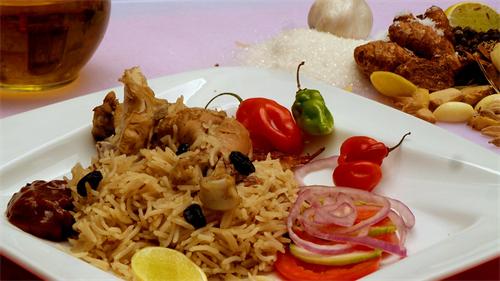
pilau masala
Rice is sautéed with onions and ghee before being simmered in broth, absorbing rich aromas. The final dish may be garnished with fried onions or raisins, combining:
- African generosity and communal dining
- Indian spice layering
- Arab cultural affinity for aromatic rice
Pilau is served at weddings, religious celebrations, and festive gatherings—an edible symbol of Zanzibar’s multicultural identity.
2. Zanzibar “Pizza” (Forodhani Style)
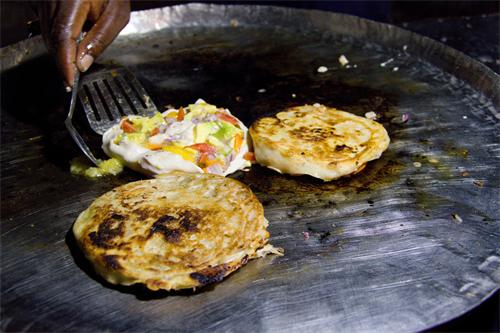
Zanzibar “Pizza”
At the vibrant Forodhani Night Market, the famous Zanzibar “pizza” draws curious travelers. Despite its name, it resembles a stuffed pancake or flatbread more than an Italian pizza.
Fillings often combine Arab-style spiced meats, Indian-flavored chicken or vegetables, eggs, cheese, and even bananas—wrapped in dough and grilled on a hot plate over open charcoal fire.
It is a perfect example of Swahili street-food inventiveness.
3. Coconut and Seafood Harmony
Coconut milk, abundant due to the island’s rich vegetation, merges painlessly with Indian curry techniques. The result is dishes like coconut curry fish, where freshly caught fish is simmered in coconut milk with turmeric, garlic, coriander, and chili.
A side of kachumbari—a tangy tomato-onion salad with faint Portuguese influence—adds brightness to the dish, completing a beautifully cross-cultural flavor profile.
On the streets, one may also find Indian-style sweets, African charcoal-grilled meat skewers, and Arab coffee scented with cardamom—all coexisting effortlessly.
VI. Zanzibar Today: Continuing the Legacy of the Spice Islands
Zanzibar’s modern economy still revolves around tourism and spices. The archipelago exports cloves, nutmeg, cinnamon, and black pepper worldwide, while “spice tours” allow visitors to experience plantations firsthand.
Despite globalization, Zanzibar’s cuisine remains remarkably true to its origins—continuously evolving yet always grounded in the triad of African, Arab, and Indian influences. The food is not merely a historical inheritance but a living, evolving cultural language.
This language carries:
- African warmth and the vibrancy of charcoal fire
- Indian depth through intricate spice combinations
- Arab elegance with its ritualistic and aromatic dishes
Together, they form a culinary identity unlike any other along the Indian Ocean coast.
Conclusion
To taste Zanzibar’s food is to embark on a journey across centuries of trade, migration, conflict, and cultural exchange. Each dish is a narrative: Ugali reflects ancestral African traditions; pilau showcases Indian spice mastery; spiced coffee whispers Arab sophistication.
The fusion is so complete that it becomes impossible to isolate the origins of individual elements—precisely what makes Zanzibar’s cuisine so compelling.
References
- Third culture Nellie: Forodhani Night Market & Zanzibar street-food guides.
- UNESCO World Heritage Centre. Stone Town of Zanzibar.
- Martin, P. J. (1991). The Zanzibar Clove Industry.
Recommend:
Why New Orleans Cuisine Is a Cultural Wonderland of African, French, and Caribbean Influences
The Coastal Food Culture of Zanzibar: A Blend of African, Arab, and Indian Flavors
The World’s Spiciest Cultures: Why Some Countries Love Heat and Others Don’t
The Science of Flavor Pairing and Why Some Cultures Break the Rules