

Food is never just food. Throughout human history, staple crops have functioned as the foundation of social organization, belief systems, economic structures, and even political identity. Among the world’s major staple crops, rice, wheat, and maize stand out not only for sustaining massive populations but also for shaping three of the world’s great agricultural civilizations: East and Southeast Asia, the Middle East–Europe–Central Asia region, and the Americas. Each crop required specific ecological conditions and agricultural techniques, and these in turn influenced the cultural values, social structures, cuisines, and even modes of thinking in those societies.
I. Rice Civilizations: Harmony, Labor, and the Collective
1. Ecological Demands and Social Organization
Rice, particularly wet paddy rice, is one of the most labor-intensive and water-intensive crops humans have cultivated. Unlike wheat or maize, rice farming requires coordinated irrigation systems, seasonal flooding cycles, and collective labor at critical stages such as transplanting and harvesting. As a result, the ecology of rice cultivation naturally encourages highly organized, cooperative communities.
Anthropologist Kaori O’Connor once noted that rice cultures tend to develop a “ hydraulic rhythm of life,” where water management becomes a metaphor for social organization—regulated, collective, and cyclical.
In regions like China, Japan, Korea, Vietnam, Thailand, and Indonesia, the emphasis on communal irrigation networks led to:
- strong village cohesion
- complex kinship alliances
- hierarchical but stable social structures
- an emphasis on harmony and conflict avoidance
Rice cultures often emphasize interdependence—reflecting the reality that one farmer’s irrigation mistake could destroy an entire season’s crop.
2. Philosophical Reflections: Harmony and Cycles
It is no coincidence that sophisticated philosophical systems such as Confucianism, Daoism, and Buddhism flourished in rice-based societies. These traditions emphasize:
- harmony within hierarchy (Confucianism)
- balance with nature (Daoism)
- cyclical views of life (Buddhism)
The agricultural cycle of rice—repetitive, rhythmic, dependent on balance—aligns closely with these worldviews. Even the calendar festivals of East Asia, such as Lunar New Year and Mid-Autumn Festival, are tied to the agrarian rhythm of rice production.
3. Culinary Culture: Precision, Balance, and Respect for Ingredients
Rice-eating cultures tend to develop cuisines that are:
- mild but precise in flavor
- focused on freshness and natural taste
- structured around a central bowl of rice
Food is often served in many smaller dishes, representing variety and harmony rather than excess. Soy sauce, fish sauce, and fermented condiments emerged to complement rice, not overpower it.
The cultural symbolism of rice is profound:
- In Japan, rice (gohan) literally means “meal.”
- In China, offering rice is equal to offering life.
- In Southeast Asia, rice spirits and rice goddesses—such as Dewi Sri in Indonesia—embody cultural fertility.
Rice is not merely a staple; it is a cosmology.
II. Wheat Civilizations: Individualism, Mobility, and Expansion
1. Ecological and Technological Characteristics
Wheat thrives in temperate, semi-arid climates, requiring far less water and coordination than rice. It can be sown and harvested individually, and animal husbandry often accompanies wheat cultivation. This combination supports more mobile, pastoral-agricultural societies.
Historically, wheat-growing regions span:
- the Fertile Crescent
- the Mediterranean basin
- Europe
- Central Asia
These regions frequently produced societies with higher individual autonomy, partly because wheat farming can be done by a single family rather than entire communities.
2. Bread as Symbol of Civilization
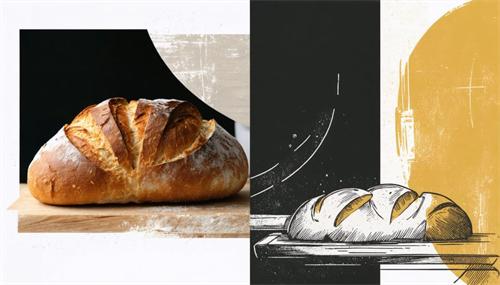
Wheat gave rise to bread—one of the earliest processed foods that could be stored, traded, and transported over long distances. Bread is not only practical; it became symbolically sacred:
- In Christianity, bread is the body of Christ.
- In ancient Greece and Rome, bread was tied to civic identity.
- Medieval Europeans measured wealth by wheat-based foods, distinguishing social classes through access to “white bread” versus darker grains.
Bread helped shape a culture of cities, markets, and trade networks.
3. Cultural Values: Rationality and Abstraction
Western philosophical traditions—Greek logic, Roman law, Enlightenment rationalism—arose in wheat civilizations characterized by:
- larger territorial states
- long-distance trade
- individual property rights
- social mobility
Some scholars compare the granularity and structure of bread with the Western cultural preference for abstraction, categorization, and linear logic. Bread-making itself—grinding, kneading, baking—involves transformative processes that encourage technological innovation.
4. Culinary Patterns: Hearty, Fermented, and Dairy-Infused
Wheat-based cuisines often include:
- bread, pasta, noodles
- dairy products such as cheese and yogurt
- roasted meats
- fermented beverages such as beer
These foods reflect a protein-rich, calorie-dense diet suitable for pastoral-agricultural lifestyles and colder climates.
Thus, wheat civilizations tend toward mobility, expansion, and structured social systems, contrasting with rice civilizations’ emphasis on rootedness and harmony.
III. Maize Civilizations: Cycles of Time, Cosmology, and Resilience
1. Origins and Ecological Adaptability
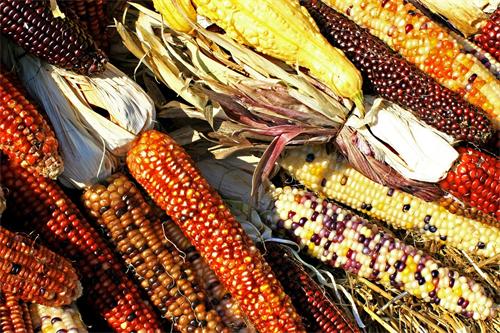
Maize originated in Mesoamerica around 9,000 years ago and became the cornerstone of civilizations such as:
- the Maya
- the Aztec
- the Zapotec
- the Inca (though Andean cultures relied more on potatoes, they adopted maize widely)
Maize grows in diverse climates—from mountains to tropics—and provides abundant caloric yield. However, maize requires lime treatment (nixtamalization) to unlock its full nutritional value. This technological innovation profoundly shaped food systems, allowing maize to sustain dense populations.
2. Mythology and Identity
Few crops are as culturally embedded as maize is to Mesoamerican civilizations. In the Maya creation myth (Popol Vuh), humans were literally made from maize dough. Maize god imagery permeates architecture, pottery, and rites of kingship.
This spiritual centrality of maize created societies that viewed agriculture not just as survival, but as cosmic duty. Seasonal cycles, astronomical calendars, and ritual life all centered on maize planting and harvest.
3. Social Organization and Worldview
Maize agriculture sits between the extremes of rice collectivism and wheat individualism. It requires community cooperation for irrigation and terracing but allows enough flexibility for family-based cultivation.
This produced social systems characterized by:
- city-states rather than unified empires (Maya)
- strong priestly and astronomical traditions
- ritual cycles tied to planting seasons
Time itself was conceptualized as cyclical and regenerative—mirroring the maize plant’s life cycle.
4. Culinary Legacy: The Globalization of the Tortilla
Nixtamalization produced masa, the foundation of tortillas, tamales, and arepas (in South America). This technique created a cuisine based on:
- handheld, portable foods
- subtle yet earthy flavors
- maize as both starch and identity
Today, tortillas are among the most globally consumed foods, reflecting maize civilizations’ deep culinary creativity.
IV. How Staple Foods Shape Civilizational Patterns
1. Social Structures
- Rice → collective, hierarchical, cooperative
- Wheat → individualistic, mobile, market-oriented
- Maize → ritualistic, cosmological, city-state oriented
2. Economic Systems
- Rice supports densely populated, bureaucratic states.
- Wheat supports expansionist empires and long-distance trade.
- Maize supports ritual economies tied to calendar cycles.
3. Political Philosophies
- Rice cultures emphasize harmony and social stability.
- Wheat cultures emphasize law, citizenship, and rights.
- Maize cultures emphasize cosmic order and the priestly class.
4. Culinary Aesthetics
- Rice cuisines: balance, freshness, subtlety
- Wheat cuisines: technique, fermentation, heartiness
- Maize cuisines: earthiness, ritual, portability
V. Modern Transformations: Globalization and the Mixing of Staple Civilizations
Today, the boundaries between staple-food civilizations are blurring.
- Sushi and ramen are global icons.
- Bread and pasta are universal culinary staples.
- Tacos and tortillas have become mainstream worldwide.
- Rice bowls and poke bowls combine Asian foundations with global creativity.
At the same time, the cultural symbolism of these foods remains powerful:
- Rice still anchors identity in East Asia.
- Bread still holds spiritual and political meaning in Europe and the Middle East.
- Maize still defines indigenous identity in the Americas.
Globalization has made these foods mobile, but not interchangeable; each carries the weight of centuries of culture.
Conclusion: Staple Foods as Cultural DNA
Rice, wheat, and maize are more than agricultural products; they are civilizational DNA. The way societies grow, prepare, and honor their staple foods influences:
- how communities form
- how families are structured
- how power is organized
- how people celebrate
- how they understand life and time
In understanding staples, we understand civilizations. And in tasting the foods of the world, we taste the values, histories, and dreams of the cultures that brought them forth.
References
- Bray, Francesca. The Rice Economies: Technology and Development in Asian Societies. University of California Press, 1994.
- Goody, Jack. Cooking, Cuisine and Class: A Study in Comparative Sociology. Cambridge University Press, 1982.
- Anderson, E. N. Everyone Eats: Understanding Food and Culture. New York University Press, 2014.
- Jacobs, Andrew. Bread: A Global History. Reaktion Books, 2012.
Recommend:
The World’s Spiciest Cultures: Why Some Countries Love Heat and Others Don’t

Why Yunnan’s Food Culture Is China’s Most Diverse—and How Ethnic Minorities Shaped It
How Taste for Bitterness Varies Across Countries—and the Traditions Behind It

What Food Critics Get Wrong About Cultural Cuisine