
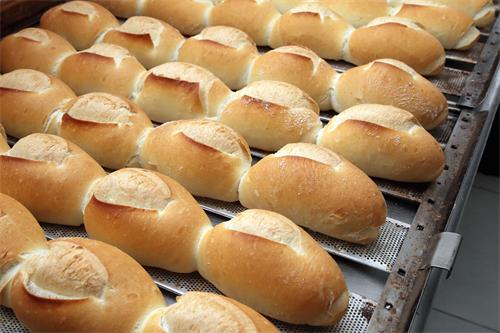
Bread is so familiar in our daily lives that we often forget its significance as one of the oldest cultural foundations of human civilization. Long before it became a supermarket commodity or a café display item, bread carried layers of symbolic meaning—religious, economic, political, and emotional. Its story is, in many ways, the story of human society itself.
I. Origins: When Crushed Grains Met Fire
The history of bread begins in the Neolithic era, when early humans first learned to crush wild grains, mix them with water, and bake the resulting paste on heated stones. This simple innovation represented far more than a new food—it marked the shift from nomadic foraging to settled life. Grain cultivation required planning, land management, and cooperation. Bread, in this sense, was not only nourishment but also a catalyst for early social organization.
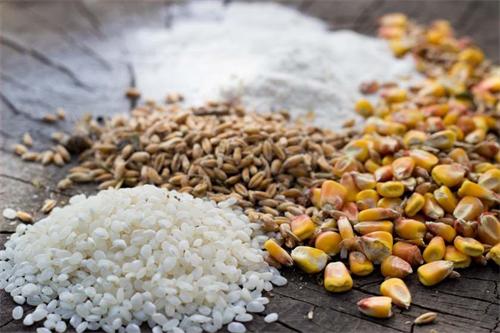
As wheat became one of the most adaptable crops across continents, bread followed it, spreading from one region to another until it evolved into a global dietary symbol. Wheat, rice, and corn eventually became the world’s three major staple grains, but it was wheat that most naturally transformed into bread and thus shaped culinary history.
II. Egypt: Where Bread Became Divine
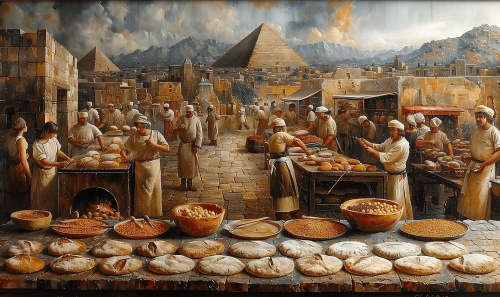
It was in ancient Egypt that bread first acquired its aura of sacredness. Egyptians discovered natural fermentation—perhaps by accident when leftover dough captured wild yeast and rose unexpectedly. This transformation from flat, dense cakes to airy loaves was interpreted as a divine miracle. Rising dough was seen as a metaphor for life itself, a mysterious expansion created by unseen forces.
This belief infused bread with spiritual meaning. It became an essential component of religious offerings and rituals, a bridge between mortal life and the gods. Tomb murals depict extensive scenes of grain grinding, dough kneading, and oven baking, all intended to ensure that the deceased would enjoy abundance in the afterlife.
Bread also served as a practical cornerstone of Egyptian society. Workers on monumental construction projects, including the pyramids, were often compensated in bread and beer. Thus, bread was food, currency, and symbol of life—all at once.
III. Greece and Rome: Bread, Class, and Power
The ancient Greeks inherited Egyptian baking techniques and refined them into a professional craft. Public bakeries emerged as essential urban spaces, but bread remained a marker of socioeconomic status. White bread, made from finely milled wheat, was reserved for elites, while darker breads from barley or rye sustained the working classes. Alongside olive oil and wine, bread formed the iconic “Mediterranean triad.”
The Romans pushed this system further and turned bread into a political instrument. The state established large public bakeries to supply the urban population with inexpensive or free loaves. This policy evolved into the famous Roman formula: panem et circenses—“bread and circuses.” Bread was the state’s tool to maintain social stability and secure loyalty from the masses.
Roman society classified bread types with extraordinary precision. Loaves enriched with honey, milk, or cheese were associated with status, while coarse breads reflected poverty. In Rome, to know a person’s bread was to know their place in society.
IV. Medieval Europe: Bread as Spiritual and Social Order
With the rise of Christianity, bread took on new, profound meaning. In the Eucharist, the consecrated bread symbolized the body of Christ, establishing bread not merely as sustenance but as the core of religious belief. Church regulations even dictated the ingredients—only pure wheat flour could be used for sacramental bread.
On an everyday level, bread mirrored social hierarchy. Manor lords controlled communal ovens, forcing peasants to pay for baking rights. The refinement of bread—white, brown, or coarse—signified everything from weather patterns to economic conditions. When harvests failed, people often resorted to adulterated grains. Rye bread infected with ergot fungus occasionally caused hallucinations, mass hysteria, and even accusations of witchcraft.
Bread in medieval Europe was a barometer of both spiritual life and worldly struggles.
V. Industrial Revolution: Mechanization and the Fall of Symbolism
The Industrial Revolution fundamentally reshaped bread’s identity. New machines—steam-powered grain mills, mechanical mixers, dough dividers, and temperature-controlled ovens—transformed bread-making from a laborious craft into an efficient industrial process.
By the 19th century, roller milling allowed wheat flour to be separated more finely, producing the pristine white flour once reserved only for elites. Mechanization democratized white bread. Once a mark of privilege, white bread became the universal standard of modern urban living.
This shift erased much of bread’s earlier symbolic significance. Bread became less a sacred or artisanal product and more a predictable, standardized commodity. With World War II came the rise of sliced bread and mass-produced loaves, perfectly soft, uniform, and engineered for convenience. For decades, white bread dominated global markets as the emblem of efficiency and industrial progress.
VI. A Contemporary Paradox: Industrial Bread and the Artisanal Revival
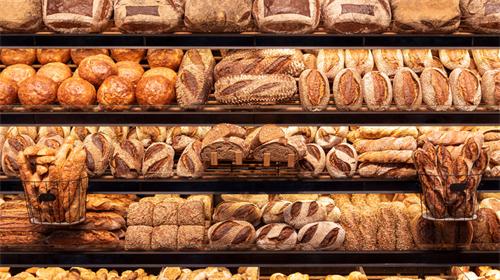
Yet modern abundance brought new concerns. As societies grew more aware of nutrition and industrial excess, the limitations of processed white bread became apparent. This sparked a cultural revival: sourdough, whole wheat, rye, multigrain, gluten-free variants, and ancient-grain breads gained popularity.
This shift reflects more than dietary preference; it signals a longing for authenticity and connection. Bakers and consumers alike began to seek loaves with character—imperfect crusts, tangy aromas, long fermentations, and stories rooted in regional identity.
The resurgence of artisanal baking worldwide has restored bread to its earlier prestige. Independent bakeries cultivate wild yeasts using local fruit, flowers, or herbs—peach skins, strawberries, Muscat grapes, roses, chamomile, or seasonal vegetables. These natural starters create distinctive flavors shaped by climate, humidity, and microbial diversity. In this way, bread becomes a medium for expressing place and craft, echoing ancient traditions but with modern creativity.
VII. Bread Traditions Across Cultures
European and French-Style Breads
“Euro-French” breads represent a mosaic of European baking heritages. Germany contributes rye loaves, soft pretzels, and seeded breads; Austria offers Vienna breads and rich multigrain varieties; France is famous for baguettes and croissants; Italy adds focaccia, ciabatta, and pizza dough. These breads rely on simple ingredients—flour, water, salt, yeast—and meticulous craftsmanship, emphasizing crust texture, fermentation, and aroma.
Japanese Breads
Japanese baking diverges in texture and technique. Influenced by European styles yet transformed through local creativity, Japanese breads often involve milk, butter, sugar, and soft fillings. Their interior crumb is characteristically fine, elastic, and stretchable—achieved through strict dough strength control. Japan categorizes its breads into five groups: staple breads, sweet breads, savory or “prepared” breads, French-style breads, and doughnuts. Iconic examples include anpan (red bean bread), kare-pan (curry bread), and milk-rich shokupan.
Taiwanese Breads
Taiwan’s bakery culture emphasizes accessibility and flavor innovation. Using fewer expensive ingredients like butter, Taiwanese bakeries developed cost-efficient yet beloved creations such as pork floss rolls and pineapple buns. They are known for decorative finishes, creative fillings, and playful textures that appeal to everyday consumers.
Soft European-Style Breads (Soft Euro Breads)
Soft Euro breads combine European techniques with Asian preferences for tender texture. The use of tangzhong (a cooked flour-water paste) gives the bread a moist, elastic crumb. These loaves often showcase striking colors, fillings, and artistic shaping, making them distinct in the Asian baking market.
VIII. The Meaning of Bread Today
Despite its many transformations, bread remains one of the most emotionally charged foods in human culture. It signifies home, warmth, abundance, and memory. The process of kneading, waiting, fermenting, and watching dough rise connects modern bakers to an ancient lineage of hands that shaped the same essential food.
The best bread does not come from high-speed industrial mixers or perfectly calibrated machines. It comes from time—time spent nurturing fermentation, handling dough gently, and allowing natural processes to build flavor.
Bread is more than sustenance. It is ritual, craft, history, and connection. Each loaf carries echoes of millennia—of civilizations that once saw bread as divine, of societies that fought over grain harvests, of families that survived harsh winters through stored flour, and of bakers today who reclaim the art of slow fermentation as an act of cultural memory.
From sacred altars to factory lines, from political tools to artisanal treasures, bread has journeyed across every aspect of human life. Its story continues, evolving with each loaf pulled warm from the oven.
References
- Samuel, Delwen. “The Archaeology of Bread.” In Ancient Egyptian Materials and Technology, edited by P.T. Nicholson & I. Shaw. Cambridge University Press, 2000.
- Bobrow-Strain, Aaron. White Bread: A Social History of the Store-Bought Loaf. Beacon Press, 2012.
- Kaplan, Steven Laurence. Good Bread Is Back: A Contemporary History of French Bread. Duke University Press, 2006.
Recommend:
The Cultural History of Bread: From Sacred Symbol to Everyday Staple
Rice, Wheat, and Maize Civilizations: How Staple Foods Shape Culture
The World’s Spiciest Cultures: Why Some Countries Love Heat and Others Don’t

Why Lima Has Become the World’s Culinary Capital—And What Peruvian Culture Has to Do With It